Coming Soon!!!!

|
"At Spirit Hub we believe in having options for everyone. [Whether] it's Tito's for an upcoming party or one of our [specialty] craft blends for a gift, we make shopping for what you need easy. With a distinct craft focus of [specialty] small batch brands, we give you great options to find your favorite sipper or to try something new."
|
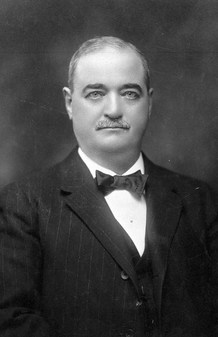 “Find A Grave Memorial #683” “Find A Grave Memorial #683”
"Bartholemew William Barclay "Bat" Masterson (November 26, 1853–October 25, 1921) spent the first half of his life in what is remembered as the "Wild West." During that period, he distinguished himself as a buffalo hunter, Indian fighter during the celebrated Second Battle of Adobe Walls, civilian scout for the U. S. Army, and gunfighter and lawman in Dodge City, Kansas and elsewhere. The "Wild West" phase of Masterson's life was essentially over by the mid 1880s when he was still in his early thirties. Masterson moved to Denver and established himself as a leading "sporting man," or gambler. He took an interest in prize fighting and became a leading authority on the sport. He would attend almost every important match and title fight in the United States from the 1880s until his death in 1921. He knew, and was known by, all of the Heavyweight Champions from John L. Sullivan and James J. "Gentleman Jim" Corbett to Jack Johnson and Jack Dempsey. He moved to New York City in 1902 and would spend the rest of his life there as a reporter and columnist for the New York Morning Telegraph. Masterson's column not only covered boxing and other sports, but also gave his frequent opinions on crime, war, politics and other topics. He became a close friend of President Theodore Roosevelt and became one of the "White House Gunfighters," along with Pat Garrett and Ben Daniels who received federal appointments from Roosevelt. He was known throughout the country as a leading sports writer and celebrity at the time of his death in 1921. Masterson was born on November 26, 1853, at Henryville, Quebec, in the Eastern Townships of what was then known as Canada East, and baptized Bartholomew Masterson. His father Thomas Masterson (or Mastersan) was born in Canada of an Irish family; and his mother Catherine McGurk (or McGureth) was born in Ireland. He was the second child in a family of five brothers and two sisters They were raised on farms in Quebec, New York, Illinois, and Missouri until they finally settled near Wichita, Kansas. Alfred Henry Lewis introduced Masterson to President Theodore Roosevelt, and the two formed a friendship that resulted in Masterson being a frequent White House guest, and also included regular correspondence. President Roosevelt also arranged for Masterson's appointment as Deputy U. S. Marshal for the Southern District of New York. On February 2, 1905 President Roosevelt wrote Masterson a letter which concluded with the lines: "You must be careful not to gamble or do anything while you are a public officer which might afford opportunity to your enemies and my critics to say that your appointment was improper. I wish you to show this letter to Alfred Henry Lewis and go over the matter with him." Bat served in his $2,000 per year job until August 1, 1909. On July 2, 1921 Masterson attended his last heavyweight championship fight. It was the so-called "Million Dollar Gate," promoted by Tex Rickard, in which Jack Dempsey defended his title of Heavyweight Champion of the World. Three months later on October 7, silent screen cowboy star William S. Hart visited Masterson. They were photographed standing together on the roof of the New York Morning Telegraph building, and went back to Masterson's office, where he asked Hart to sit in his chair and pose for a second photo with him. According to Hart: "I did so, and he stood beside me. Mr. Masterson was sitting in that same chair eighteen days later when he heard the last call." Hart subsequently cast a Masterson lookalike as Masterson in his biographical film Wild Bill Hickok, which was released in 1923. Bat Masterson died at age 67 on October 25, 1921, at his desk from a massive heart attack after writing what became his final column for the New York Morning Telegraph. Five hundred people attended Bat Masterson's funeral service at Frank E. Campbell's Funeral Church at Broadway and Sixty-sixth Street. Masterson's honorary pallbearers included Damon Runyon George Rickard and William Eugene Lewis. Runyon was a close friend of Masterson and offered this memorable eulogy: "He was a 100 percent, 22-karat real man. Bat was a good hater and a wonderful friend. He was always stretching out his hand to some down-and-outer. He had a great sense of humor and a marvelous fund of reminiscence, and was one of the most entertaining companions we have ever known. There are only too few men in the world like Bat Masterson and his death is a genuine loss." Masterson was buried at Woodlawn Cemetery in The Bronx, New York City. His full name, William Barclay Masterson, appears above his epitaph on the large granite grave marker in Woodlawn. Masterson's epitaph states that he was "Loved by Everyone."
Source: Wikipedia.org | Sunday, February 11, 2018, 12:13PM CDT |
"The Long Branch Saloon was a well-known saloon in Dodge City, Kansas from about 1874 to 1885. It had numerous owners, most notably Chalk Beeson and gunfighter Luke Short. The establishment provided gambling and live entertainment, including Beeson's five-person orchestra. It was the scene of several altercations, shoot-outs, gunfights, and standoffs often associated with cattle towns in the American wild west, the most famous of which was the 1879 Long Branch Saloon Gunfight, in which Frank Loving killed Levi Richardson. The saloon was built as the result of a wager between cowboys and soldiers playing ball. Bets were placed and if the cowboys beat the soldiers, the soldiers agreed to provide building materials to construct a saloon. Chalkley Beeson, a wealthy farmer and rancher, and William Harris bought the saloon in 1878. Harris named it after his hometown of Long Branch, New Jersey. It was a plain storefront bar with little ornamentation, which was typical for frontier saloons of the time. The saloon prospered until the railroad replaced the cattle drive. The establishment burned down in a fire in 1885, and was never rebuilt. The saloon soon became the most popular and refined saloon in Dodge City. Beeson was a talented musician and led a five-piece orchestra that played nightly. The Long Branch Saloon served milk, tea, lemonade, Sarsaparilla, all types of alcohol including champagne and beer. Anheuser-Busch was the original beer served at the Long Branch. Drinks were kept cold in the winter from ice that came from the river; in the summer ice was shipped by train from the mountains of Colorado. Gambling ranged from a game of five cent "chuck-a-luck" to thousand dollar poker pots. The saloon hosted many Old West characters, including Clay Allison, Wyatt Earp, Doc Holliday, Loving, Dave Mather, Town Marshal Charlie Bassett, and brothers Bat, Ed, and James Masterson. The saloon was the site of a gunfight on April 5, 1879 between gamblers Loving and Levi Richardson, who frequented it. Loving accused Richardson of making disrespectful advances towards his wife, and the two got into an argument that turned into a gunfight across a table. Loving was grazed on the hand by one bullet and Richardson was shot three times and died. Town Marshal Bassett arrested Loving, but on April 7, a coroner's inquest ruled that Loving had acted in self-defense and he was released without charges. Professional gambler and gunfighter Short's purchase of a partial interest in the saloon in 1883 was credited as one of the causes of the bloodless Dodge City War. A saloon using the same name was featured in almost every episode of the longest-running television drama, Gunsmoke. A new establishment named the Long Branch Saloon, largely based on Gunsmoke, was built as part of the modern non-profit Boot Hill Museum entertainment and exhibit theme park in Dodge City. The exterior was modeled on period photographs of the original building, while the interior is consistent with period saloons of the era. It is furnished with an 1881 bar and two Golden Eagles on top of the back bar that were once owned by Beeson. The modern saloon hosts the Long Branch Variety Show, the longest-running seasonal show in the country."
Source: Wikipedia.org | Sunday, February 11, 2018, 12:13PM CDT |
|
|
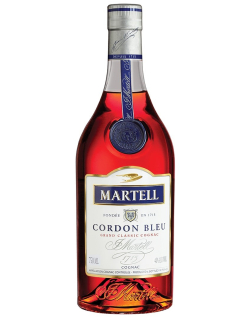
"Martell Cordon Bleu is the cognac for true connoisseurs and has acquired legendary status since its creation by Edouard Martell in 1912. Its distinctive taste, characterised by a predominance of eaux-de-vie from the Borderies, and its timeless bottle design make it a classic, unequalled in the world of cognac."
|
"List of IBA official cocktails" (2019)
|
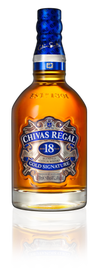
"Chivas Regal Scotch | is a blended Scotch whiskey produced by Chivas Brothers, owned by Pernod Ricard. Chivas Brothers was first established in 1801. The Chivas Regal brand's home is Strathisla Distillery at Keith, Moray in Speyside, Scotland, the oldest operating Highland distillery which was founded in 1786. Chivas Brothers traces its roots to the opening of a grocery store at 13 King St, Aberdeen in 1801. The store sold luxury foodstuffs such as coffee, exotic spices, French brandies, and Caribbean rums to a wealthy clientele. In 1842, Chivas Brothers was retained to supply provisions to the royal family at Balmoral Castle upon Queen Victoria's first visit to Scotland. Chivas Regal The Sword: Blended from whiskies matured for at least 45 years. Only 21 bottles were created, and the bottles were decorated with 22 carats of diamonds. They originally sold at $200,000 per bottle. In the early 1900s, Chivas Brothers decided to create its most aged blended Scotch whiskey to export to the U. S. where the booming economy after the turn of the century was fueling demand for luxury goods. The whiskey was named Chivas Regal. Chivas Regal is the product of a unique place, a proud lineage of whiskey makers, and more than two centuries’ of history. Discover the rich past of the world’s most prestigious whiskey!!"
|
ClassicShoppes.us
~Where Class & Distinction Meets~
~Where Class & Distinction Meets~
